
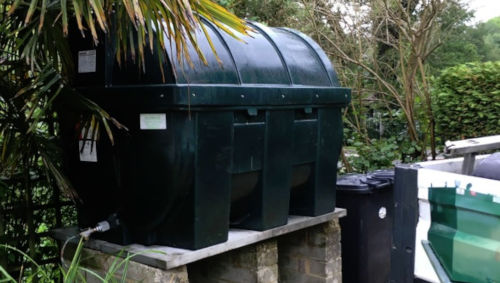
Replacing a domestic oil tank is normally a several-thousand-pound project once the tank, installation and removal are considered together. A straightforward like-for-like replacement on a sound, accessible base will sit at the lower end of the budget, while a new base, relocation, extended pipework, difficult access or specialist lifting can increase the total substantially. The only dependable figure is a site-specific quotation that states exactly what is included.
How much does it cost to replace a domestic oil tank?
There is no single replacement oil tank cost that applies to every property, but homeowners should generally budget in the thousands rather than hundreds for a complete supplied-and-fitted replacement. The final price depends on the tank selected and the work required to remove the old tank, prepare the site and install the replacement safely.
A homeowner replacing a standard domestic tank on a sound, accessible base may need relatively little additional work. The cost rises where a new base is required, the tank must be moved, the oil line needs extending, or access means the old tank has to be cut into sections or lifted over an obstruction.
This is why an online tank price should not be treated as the total cost of replacing a domestic oil tank. It is the price of one component, not the completed installation.
What a relatively straightforward replacement may involve
- a standard plastic bunded tank in a similar size to the existing tank
- a sound base that can be reused
- clear access for delivery and removal
- transfer of clean, usable heating oil
- limited changes to the existing pipework
- removal and appropriate disposal of the old tank
What makes a replacement more complex
- a custom-made steel tank or a larger-capacity model
- construction of a new base
- relocation to another part of the property
- extended, protected or trenched pipework
- fire protection measures where normal separation distances cannot be achieved
- restricted access, cutting work or specialist lifting equipment
These examples explain why two tanks with a similar purchase price can result in very different completed installation costs.
What is included in an oil tank replacement cost?
A well-prepared quotation should make it clear what is included and identify any work that may be charged separately. The main cost areas are set out below.
1. The new oil tank
The tank itself will usually be one of the largest parts of the quotation. Its price is affected by:
- capacity and dimensions
- plastic or steel construction
- single-skin or bunded design
- a standard model or made-to-measure steel tank
- the fittings, gauge and security features supplied
the manufacturer’s warranty and specification
SG Tanks supplies a wide range of domestic oil tanks
as well as standard and custom-made steel tanks. The right choice depends on the property, fuel use, available space and the findings of the installation survey.
2. Oil tank installation costs
Oil tank installation costs cover the work needed to put the new tank into service, not simply delivering it to the property. Depending on the job, this may include:
- delivery and positioning
- connection to the fuel supply line and vent
- new valves, filters or fittings
- testing the system
- transferring usable heating oil
- commissioning the installation
assessment against current Building Regulations and, where applicable, certification or notification by a competent installer
A professional oil tank installation service
should assess the proposed location and the condition of the supporting base before work starts.
3. Oil tank removal costs
The oil tank removal cost will depend on the size, material, condition and position of the old tank. Removal may involve:
- pumping out any remaining oil
- disconnecting the supply line and vent
- moving the tank out in one piece
- cutting a large or inaccessible tank into manageable sections
- using lifting equipment where access is restricted
- transporting the old tank away for appropriate disposal
Do not assume that every installation quote includes all removal and disposal work. SG Tanks provides professional oil tank removal
for customers who need this as a standalone job or as part of a full replacement. For a typical full replacement, the work can include draining the existing tank, disconnecting it, preparing the installation area, fitting the new tank, transferring usable oil and taking the old tank away. The quotation should confirm which of these steps are included for the individual property.
4. The condition of the existing base
An oil tank needs continuous, level and suitable structural support. The existing base may be reusable, but it should be checked rather than assumed to be adequate.
The existing base is one of the main causes of unexpected additional work. It may look usable from a distance but still be cracked, uneven, undersized or unsuitable for the footprint and weight of the replacement tank. A change in tank size or position may also mean constructing a new base before installation can proceed.
5. Remaining heating oil
The amount and condition of the oil left in the old tank can affect the work involved. The installer may need to pump it into temporary storage and transfer usable fuel into the new tank once installation is complete.
If the fuel is contaminated with water or debris, it may not be suitable for transfer. The quotation should state how remaining oil will be handled and whether temporary storage, filtration or disposal is included.
6. Pipework, filters and gauges
A replacement tank does not always connect directly to the existing system without further work. Corroded or unsuitable pipework may need to be replaced, while a relocated tank may require a longer fuel line or a new trench.
Other possible additions include a new filter, isolation valve, fuel gauge, overfill-prevention equipment or protected pipework. These items should be identified clearly in the quotation.
7. Access to the tank
Access can make a major difference to the labour and equipment required. A tank in an open front garden is normally easier to replace than one behind a house with narrow side access, steps, walls or established planting.
Large steel tanks may need to be cut up before they can be removed. In other cases, specialist lifting equipment may be needed to move the old or new tank over a wall, fence or building. Providing clear photographs and access measurements at the quotation stage helps the installer plan the work properly.
8. Relocation and fire-protection work
The existing position may not be suitable for the replacement tank, especially where the property or surrounding structures have changed since the original installation.
Relocating a tank can involve a new base, longer pipework and additional labour. Where normal separation distances cannot be achieved, suitable fire protection measures may also be required. The installer should assess the proposed position against current requirements before specifying the work.
Plastic versus steel replacement oil tank costs
Neither material is automatically the cheapest choice for every installation. The cost should be considered alongside the available space, required capacity, access and level of customisation.
Plastic oil tanks
Plastic tanks are available in a broad range of domestic sizes and shapes. They are lighter than steel tanks, which can make handling and positioning more straightforward, although access and the tank footprint still need to be assessed. Single-skin and bunded models are available, but the suitability of a single-skin tank depends on the site and the environmental risk assessment. A bunded tank will be required or recommended in many situations.
Steel oil tanks
Steel tanks can be supplied in standard sizes or made to measure for properties with unusual space or capacity requirements. A custom tank may cost more than an off-the-shelf model, and its additional weight can affect handling and installation. Steel may also be considered where physical security, a particular footprint or a bespoke capacity is important.
The most suitable material should be selected for the site rather than on tank price alone. You can compare the available plastic domestic oil tanks and discuss standard or made-to-measure steel options with SG Tanks before deciding.
Is oil tank removal included in the installation price?
It may be, but it should never be assumed. Two quotations that look similar at first can cover very different amounts of work.
Before comparing prices, check whether each quote includes:
- pumping out and storing the remaining oil
- disconnecting the old tank
- cutting or specialist lifting where required
- transport and disposal
- removal of an old or unsuitable base
- site clearance
- VAT
An itemised quotation makes it easier to compare like with like and reduces the risk of unexpected additions once the work has started. It should also make clear whether the price includes fuel transfer, removal, disposal, base work, certification or notification, and VAT.
When is replacement more sensible than repair?
Not every fault means that the entire tank must be replaced. A repair may be appropriate where a valve, filter or other replaceable fitting has failed and the tank itself remains structurally sound.
Replacement is more likely to be the sensible option when:
- the tank is leaking
- a plastic tank is cracked, split, bulging or badly distorted
- a steel tank has significant corrosion
- the tank or its supports have become unstable
- the same problems keep returning
- the tank is approaching the end of its expected working life and showing signs of deterioration
- the existing location or specification is no longer suitable
- a repair would only delay an unavoidable replacement
Age alone does not determine whether a tank must be replaced, but the risk of failure generally increases as a tank gets older. OFTEC advises that domestic fuel tanks should be checked regularly and notes an expected working life of around 20 years when properly installed and maintained.
A prompt assessment is especially important where there is an oil smell, staining, visible leakage or sudden movement in the tank. Repairing a minor component can be economical, but repeatedly repairing a deteriorating tank may cost more and leave the property exposed to a fuel spill. See the common signs that an oil tank needs replacing for further guidance.
What should an oil tank replacement quotation include?
A complete quotation should make the proposed specification and any exclusions easy to understand. Check for:
- tank manufacturer, model and capacity
- plastic or steel construction
- single-skin or bunded specification
- delivery and positioning
- installation labour
- base or groundwork
- pipework, filters and fittings
- transfer of usable fuel
- old tank removal and disposal
- specialist access or lifting equipment
- fire-protection work where required
- testing and commissioning
- warranty details
- VAT
- any exclusions, assumptions or provisional costs
How to obtain an accurate replacement oil tank cost
The more information the installer has, the more useful the initial guidance will be. Before requesting a quotation, gather:
- clear photographs of the tank and surrounding area
- the tank capacity and approximate dimensions, if known
- its approximate age and material
- details of any visible damage, staining or leakage
- the approximate amount of fuel remaining
- measurements or photographs showing the access route
- photographs of the base
- details of any planned change in size or location
Photographs can help with an initial conversation, but they do not always reveal the condition of the base, the suitability of the location or the full pipework route. A site survey allows these points to be assessed together and provides a more reliable basis for the quotation.
Arrange a site-specific oil tank replacement quotation
SG Tanks has more than 20 years of experience supplying, installing and removing domestic oil tanks across Sussex, Surrey and Hampshire. The team can assess the existing tank, access, base, pipework and proposed location before recommending a suitable replacement.
For a price based on the work your property actually needs, request an oil tank replacement quotation or call 01903 856403.

