
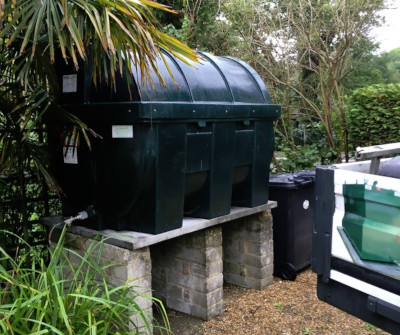
If you’re considering having an oil tank installed on your property, it’s important to understand the options available. One of the first decisions you’ll face is whether to choose a single-skin or bunded oil tank.
Both types are available in plastic and steel, but they offer different levels of protection against leaks. Understanding these differences can help you choose the right tank for your home.
What’s the difference?
A single-skin oil tank has one layer of plastic or steel that holds the heating oil. These tanks are generally cheaper to purchase, but they don’t have built-in secondary containment to capture oil if a leak occurs.
A bunded oil tank has an inner tank surrounded by a second, protective outer layer. You can think of it as a tank within a tank. The outer layer, known as a bund, is designed to contain oil if the inner tank develops a leak, reducing the risk of environmental contamination.
Single-Skin vs Bunded Oil Tanks: A Comparison
| Single-Skin Oil Tank | Bunded Oil Tank | |
| Construction | One layer of plastic or steel | Inner tank with an outer protective bund |
| Leak Protection | No built-in secondary containment | Outer bund helps contain oil if the inner tank leaks |
| Purchase Cost | Generally cheaper to purchase | Generally higher initial cost, with built-in containment |
| Installation Requirements | Suitable where regulations and the site risk assessment allow | Suitable where secondary containment is required, subject to installation requirements |
| Additional Bunding | May require separate secondary containment | Built-in bund designed to hold at least 110% of the inner tank’s capacity |
Do single-skin oil tanks need a bund?
Not every single-skin oil tank requires a separate bund. For domestic installations in England, this depends on the tank’s capacity, location and the risks associated with a potential oil spill.
Secondary containment is required in certain circumstances, including when:
- The tank holds more than 2,500 litres of oil.
- Oil could escape into an open drain or nearby watercourse.
- The tank is positioned within 50 metres of a drinking water source, such as a well or borehole.
Where a bund is required, it must be capable of holding at least 110% of the tank’s capacity. A competent installer should carry out a risk assessment to determine the appropriate requirements.
Different regulations apply outside England and to certain commercial installations.
Which oil tank should you choose?
Single-skin tanks can be a cost-effective option where installation requirements allow. However, if separate containment is needed, the additional installation costs may reduce the initial saving.
Bunded tanks generally cost more to purchase but provide built-in secondary containment, offering additional protection against leaks and spills.
Both types require regular inspections and maintenance to identify potential damage or leaks. Ultimately, the right choice depends on your property, budget and installation requirements.
Find the right oil tank with SG Tanks
SG Tanks supplies a range of plastic and steel heating oil tanks, including both single-skin and bunded options.
Explore our plastic single-skin tanks and plastic bunded tanks, or browse our steel single-skin tanks and steel bunded tanks.
If you’re unsure which type is suitable for your property, contact the SG Tanks team for further advice.

